
A creative director at a mid-sized agency recently described a “phantom win” that has become all too common in their studio. A junior designer, tasked with visualizing a concept for a beverage brand, used a high-speed generative model to produce forty variations of a glass of iced tea in under five minutes. The team was initially ecstatic. The lighting was sharp, the condensation looked real, and the throughput was unprecedented.
But when it came time to integrate those assets into the actual campaign, the “win” evaporated. None of the images featured the specific bottle shape required by the client. The ice cubes were geometrically impossible, and the color palette drifted toward a generic “sunny” filter that clashed with the brand’s moody, artisanal identity. What looked like five minutes of work turned into twelve hours of manual Photoshop surgery and eventual re-shoots.
The mistake wasn’t the use of AI; it was the prioritization of speed over structural control. In the rush to capitalize on the “slot machine” effect of generative tools, many teams are inadvertently trading their creative authority for high-volume noise.
The Seduction of the Instant Output
The psychological appeal of rapid AI generation is difficult to overstate. There is a dopamine hit associated with seeing a high-fidelity image materialize from a single sentence. However, for agencies, this speed often functions as a trap. When a “good enough” result appears in seconds, the incentive to refine, direct, and curate the output diminishes.
This creates a gap between a visually impressive image and a client-ready asset. In a professional production environment, an image isn’t just a pretty picture; it is a piece of a larger system. It must adhere to specific lighting directions, spatial requirements for copy, and strict brand guidelines. When speed is the primary metric, teams often find themselves in a state of “creative drift,” where the AI’s inherent biases—its preference for certain lighting angles or stock-photo-style compositions—replace the agency’s original vision.
The pressure for fast turnaround times exacerbates this. If a client expects a concept by EOD, it’s tempting to send over ten AI-generated options rather than three carefully directed ones. This leads to a degradation of production standards that is hard to claw back once the client becomes accustomed to the volume.
Why Volume is the Enemy of Client Trust
There is a persistent myth that providing more options increases value. In reality, flooding a client with dozens of AI-generated variations often signals a lack of decisive art direction. It suggests that the agency is “prompt mining”—throwing ideas at a wall to see what sticks—rather than applying expertise to solve a problem.
This approach creates a paradox of choice. When presented with twenty slightly different versions of a scene, a client often feels overwhelmed rather than empowered. Furthermore, the lack of consistency across these variations is a red flag. If the protagonist of an ad campaign has a slightly different jawline in every image, or if the “brand red” shifts from crimson to vermilion across social assets, the brand equity is eroded.
The hidden labor of unmanaged AI workflows is another factor. While the generation takes seconds, the time spent “fixing” inconsistent character details or correcting hallucinated artifacts across a high volume of images often exceeds the time it would have taken to build the assets using a more controlled, albeit slower, pipeline.
Strategic Prototyping with Nano Banana
To avoid the velocity trap, production teams need to reframe how they use different tiers of generative models. High-speed tools should be relegated to the concepting and “stress-test” phases rather than final production.
Using Nano Banana for rapid iteration allows a team to establish stylistic guardrails early on. During the mood board phase, you aren’t looking for a final asset; you are looking for confirmation on lighting, palette, and overall composition. It is a low-stakes environment where you can fail fast. If a particular color scheme isn’t working, you find out in seconds.
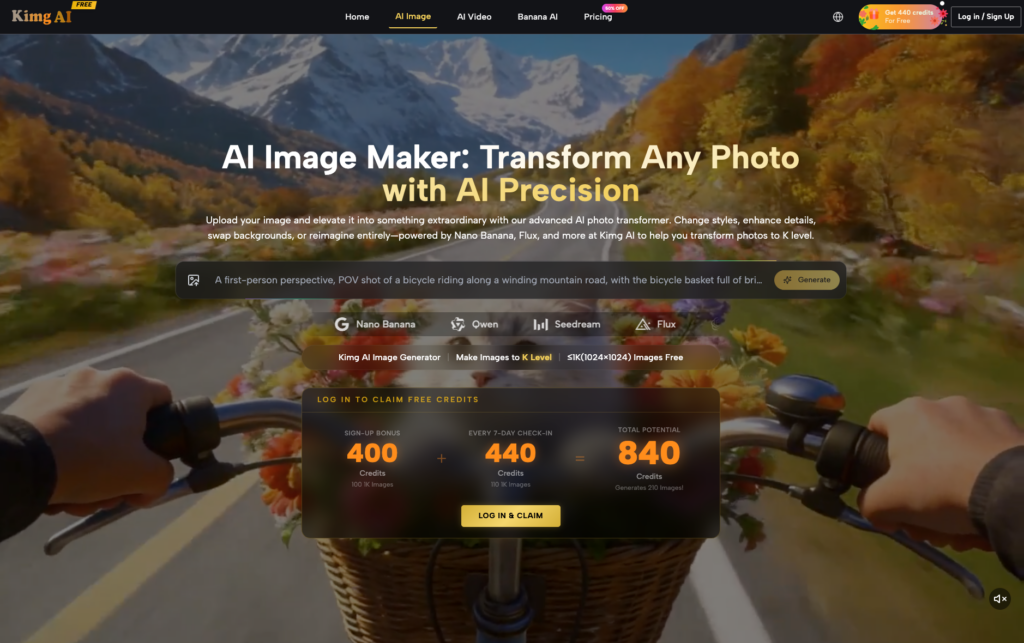
By using the fast-tier generation within the Kimg AI ecosystem, agencies can present a cohesive visual direction to the client before a single high-resolution credit is spent. This stage is about exploration, not delivery. The moment a team starts trying to use a high-speed model for a final deliverable without a structural plan, they are inviting the “phantom win” scenario described earlier.
The Technical Debt of Generic Prompting
One of the most significant roadblocks to professional AI integration is the reliance on “natural language” without technical constraints. Relying on descriptors like “vivid,” “8k,” or “photorealistic” is largely a waste of time in a professional workflow. These are generic markers that do nothing to solve specific production problems.
Instead, teams should focus on seed control and negative prompting. If you find a composition that works but the lighting is too harsh, you need the ability to maintain the “seed” of that image while adjusting the parameters. Without this level of control, you are essentially starting over every time you hit the “generate” button.
There is also the issue of “hallucinated lighting.” High-speed models often prioritize aesthetics over physics. You might get a beautiful reflection on a glass that has no corresponding light source in the scene. While this looks fine in isolation, it becomes an nightmare for post-production artists who need to composite that glass into a real-world environment. Acknowledging these limitations is the first step toward building a more robust pipeline.

Calibrating Control with Banana AI
Professional workflows require a transition from text-only prompts to image-to-image and structural guidance. This is where Banana AI becomes a necessity rather than a luxury. By moving beyond text, creators can use reference images or sketches to dictate spatial consistency.
If a campaign requires a specific product placement, a text prompt will almost never get the proportions or the perspective right on the first try. However, using the image-to-image capabilities within the suite allows the creator to lock in the layout. This shift from “asking” the AI for an image to “directing” the AI to fill a specific frame is the hallmark of a mature creative operation.
Inpainting and outpainting are also critical tools for maintaining control. Instead of re-rolling an entire image because a hand looks distorted or a background element is distracting, precise editing allows you to fix only the problematic areas. This maintains the integrity of the parts of the image that are already working, preventing the “one step forward, two steps back” cycle that plagues amateur workflows.
Establishing a repeatable “style lock” ensures that every asset generated—whether it’s for a landing page, an Instagram story, or a print ad—feels like it belongs to the same visual ecosystem. This level of calibration is only possible when you prioritize the tool’s control mechanisms over its raw generation speed.
The ‘Black Box’ Problem and Creative Uncertainty
It is important to maintain a healthy skepticism regarding what these models can actually achieve. Despite the marketing around “Nano Banana AI” and similar high-end models, we are still dealing with a “black box” technology. No model currently on the market can perfectly interpret complex spatial physics 100% of the time.
Expectations need to be managed, both internally and with clients. Over-promising “instant delivery” is a recipe for disaster. There will always be a percentage of outputs that contain unpredictable artifacts—missing limbs, warped perspectives, or incoherent textures. If your workflow doesn’t account for the time required to manually audit and fix these errors, your efficiency is an illusion.
The “AI look”—a certain hyper-smooth, overly saturated aesthetic—is currently saturating social feeds. For agencies, the goal should be to hide the tool. Human art direction remains the only safeguard against the generic. If an asset looks like it was generated by a machine in five seconds, it loses its ability to capture a viewer’s genuine attention.
True production efficiency isn’t about how many images you can generate per minute. It’s about how many of those images can actually be used in a final campaign without requiring a total overhaul. By shifting the focus from speed to control, agencies can stop playing the generative slot machine and start producing work that actually meets the standard their clients expect.