
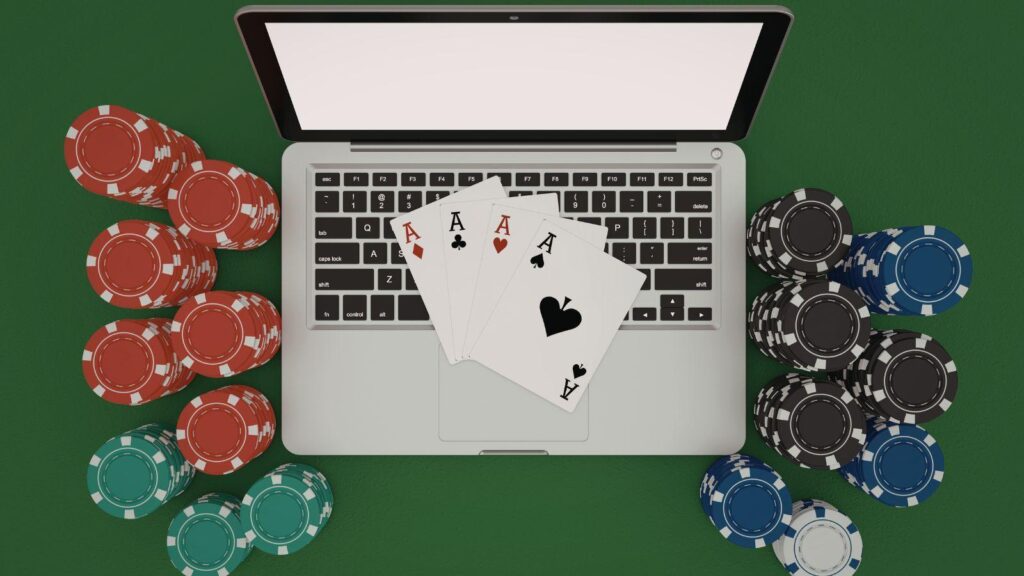
You sit down at your first free-play table, get dealt pocket aces, then spend 20 seconds hunting for the raise button while the auto-fold timer ticks to zero. Hand gone.
That is the real first lesson in online poker – the interface punishes hesitation before the cards get a chance to. Before you study hand ranges or pot odds, you need a few mechanical habits that make the software feel like second nature.
Here are five skills, ordered from easiest to hardest, to drill during your free-play window.
1. Set Lobby Filters to Match Your Attention Span
This is the lowest-effort skill on the list – and the most skipped.
Poker lobbies show dozens of tables across multiple game types, buy-in levels, and player counts. Without filters, beginners open the first table they see, which is often a high-speed format that punishes slow decisions.
Spend five minutes on the filter panel before you click a seat. Set maximum buy-in, minimum players, and game type to something calm:
Concrete drill: Open the lobby, apply three different filter combinations, and note how many tables appear under each. Do this before you sit anywhere. You are building muscle memory for a panel you will use every session.
2. Identify Your Seat Position Before the First Hand
At a table of six identical-looking usernames, knowing you are in seat 4 – and that seat 4 is the cutoff when the button is on seat 6 – separates acting in position from acting blind to it.
Most platforms display your seat number in the table UI, often in a corner or next to your stack. Find it in free play. Then track the button each hand:
- Where is the button relative to your seat?
- Count the gap – two seats to your right means you are in the big blind next orbit
- Note whether you are in early, middle, or late position
This is not strategy yet. It is spatial awareness of a diagram you will stare at for thousands of hours.
Concrete drill: Play 20 hands without looking at your cards. Only watch the button and count your position each hand. Zero card decisions, 100% interface learning.
3. Locate the Time-Bank Button Before You Need It
Every platform gives you a standard action clock – usually 15 to 30 seconds – plus a separate time-bank reserve for harder decisions.
New players discover the time-bank button only after they have already auto-folded a strong hand in panic.
In free play, trigger it deliberately on hands where the decision is clear. You want the click reflex to be automatic before real money is involved.
- On desktop: usually a small icon near the action controls
- On mobile: often a tap-and-hold
Find it and click it ten times across a session. That solves a problem that trips up a surprising number of players in their first real-money session.
4. Practice the Bet-Sizing Slider at Exact Increments
Bet-sizing sliders are imprecise by default. Dragging to “half pot” on a touchscreen often lands at 47% or 53%. On desktop, most platforms let you type an exact amount – but that input box is easy to miss.
A standard opening raise in cash games is 2.5x the big blind. If the big blind is 10 chips, your open should be 25. Practice hitting that number cleanly.
Then practice a pot-sized bet: if the pot is 60 chips, type 60 – not 58 or 63.
Precision here is a mechanical habit, not a math problem.
Concrete drill: For ten consecutive hands, bet only exact multiples of the big blind – 2x, 2.5x, 3x. No slider guessing. This forces you to use the manual input and builds the habit before real money poker raises the cost of every misclick.
5. Run a Full Session on Mobile Before Switching to Desktop (or Vice Versa)
The same platform can feel like a completely different game on a phone versus a browser. Button placement shifts, the chat box moves, and the time-bank tap zone changes.
Those who only practice on desktop then play their first real session on mobile are effectively starting over on interface literacy.
Pick whichever device you will use most and grind your free-play hours there. If you plan to play texas holdem poker on both, run at least one dedicated session on each before depositing.
Note the three controls that feel awkward on each device and click them ten times in a row. Awkward becomes automatic faster than you expect.
Free play is not about winning chips. It is about making the software invisible. Get these five mechanics into muscle memory and you will arrive at your first real table thinking about the game – not hunting for buttons.